Learn more about us.




Newsletter subscription
Never miss the latest insights, blogs and news
Subscribe to our newsletter and never miss the latest insights, events and blogs.


The era of the five-year strategic plan written in stone is over. If the last few years have taught the global business community anything, it is that uncertainty is not a weather event to wait out, but the climate we operate in.
Our Editorial Team brings you the latest in blog posts covering business, finance, sustainability, and programme insights from Solvay Lifelong Learning!
Never miss the latest insights, blogs and news. Subscribe to our newsletter.
For leaders operating out of the heart of Europe, the challenge is no longer just "managing change," but cultivating an organisational reflex for sustainable innovation. At Solvay Brussels School, we observe that leaders who thrive are not necessarily those with the most advanced tech stacks, but those who have mastered the convergence of quantitative rigour and human insight.
Here is how the landscape of leadership and innovation is shifting in 2026, and why the "Homo Universalis" ideal is more relevant than ever.
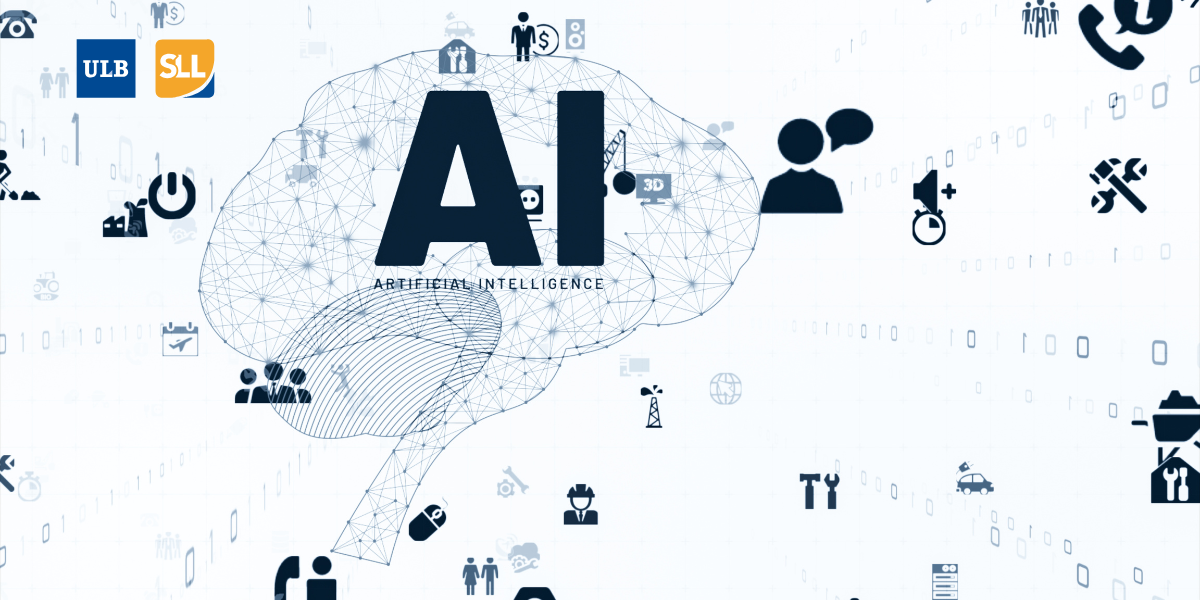
Between 2023 and 2025, the corporate world was consumed by the hype of generative AI. Today, the dust has settled. The question for executives is no longer "What can this technology do?" but "Where does it actually create value?" (Hult Ashridge, Porto Business School)
True digital leadership today is less about technical fluency and more about strategic ethics. It requires leaders who can look at a predictive model and ask the hard questions: Is this data unbiased? Is this application sustainable? Does this displace or augment our workforce?
Innovation in this context goes beyond adopting every new tool and matures into having the discipline to say "no" to efficient distractions in favour of effective, long-term value creation. (WOBI)
A common misconception is that innovation happens solely in the R&D department. In reality, innovation is a culture, not a function.
Our research and executive interactions suggest that the primary bottleneck to innovation is rarely a lack of ideas—it is a lack of psychological safety. When teams fear failure, they revert to the safe, the known, and the mediocre.
Effective leadership creates a "learning zone" where accountability coexists with the freedom to experiment. This aligns with Solvay’s core value of Free Inquiry (Libre Examen). We teach leaders to reject dogma and appeals to authority, fostering environments where the best idea wins, regardless of the pay grade of the person who proposed it.
For a long time, sustainability was treated as a compliance exercise or a PR necessity. In the current economic climate, it has become a strategic "moat"—a defensive advantage.
Supply chains are fragile; energy costs are volatile. Leaders who view sustainability through the lens of efficiency and resilience are finding that "green" initiatives often double as risk management strategies. The innovative leader today does not ask "How much will sustainability cost us?" but "What is the cost of inaction to our long-term viability?"
There is a reason we emphasise our location. Brussels is a paradox: a human-scale city that hosts the heavyweights of global decision-making, from the EU to NATO.
For the modern executive, this proximity to policy-making is a competitive asset. Innovation does not happen in a regulatory vacuum. Understanding the interplay among public policy, economics, and business strategy often separates a fragile startup from a sustainable industry leader. Our ecosystem allows participants to navigate this complexity, turning regulatory foresight into a business opportunity.
Specialisation remains important (and some of our biggest programmes offer it), but the complexity of modern problems—climate change, digital ethics, geopolitical instability—requires a multidisciplinary mindset.
We are seeing a return to the value of the generalist leader: one who can read a balance sheet with the same proficiency as they navigate a crisis communication plan. This is the essence of the Solvay approach. We leverage quantitative methods not as an end in itself, but as a foundation for human-centric decision-making.
Whether you are looking to sharpen your negotiation skills, understand the nuances of sustainable finance, or lead a digital transformation, education is an asset that yields guaranteed returns.
Are you ready to challenge your own assumptions? Explore our Executive Education Portfolio and discover how Solvay Brussels School can help you lead with clarity in a complex world.
Article edited on the 10/02/2026
Never miss the latest insights, blogs and news. Subscribe to our newsletter.
Subscribe to our newsletter and never miss the latest insights, events and blogs.
What other people like
Our Editorial Team brings you the latest in blog posts covering business, finance, sustainability, and programme insights from Solvay Lifelong Learning!
8/06/26
Our Editorial Team brings you the latest in blog posts covering business, finance, sustainability, and programme insights from Solvay Lifelong Learning!
8/04/25
Alex is Executive consultant in digital transformation, business strategy and architecture of core business applications, specialising in growing privately-held, owner-managed European companies since 2004. He is an Adjunct Professor and Advisor for Digital Innovation and Transformation at Solvay Brussels School
30/01/25